In the fall of 1963, President John F. Kennedy arrived in Fort Worth, Texas, as part of a five-city tour of the Lone Star State. Accompanying him were his wife, Jacqueline Kennedy, and Vice President Lyndon Johnson. Air Force One landed late in the evening and immediately took the president to Hotel Texas, where he and the first lady would sleep in Room 850 for the night. Hanging on the wall next to the bed was Charles M. Russell’s Lost in a Snowstorm—We Are Friends. It was chosen, along with more than a dozen other works, to represent the arts and culture of Texas. It was also chosen to represent the West. The next morning, as the president left the hotel, he passed under the building’s marquee, which read, “Welcome to Ft. Worth — Where the West Begins.” The date was November 22, 1963. Later that day, an assassin’s bullet would kill the president in nearby Dallas. Although brief and marred by tragedy, the intersection of both JFK and CMR is unique. It established an important outreach of Western art to a broader and more national audience. And who better to reach out to than the president of the nation?
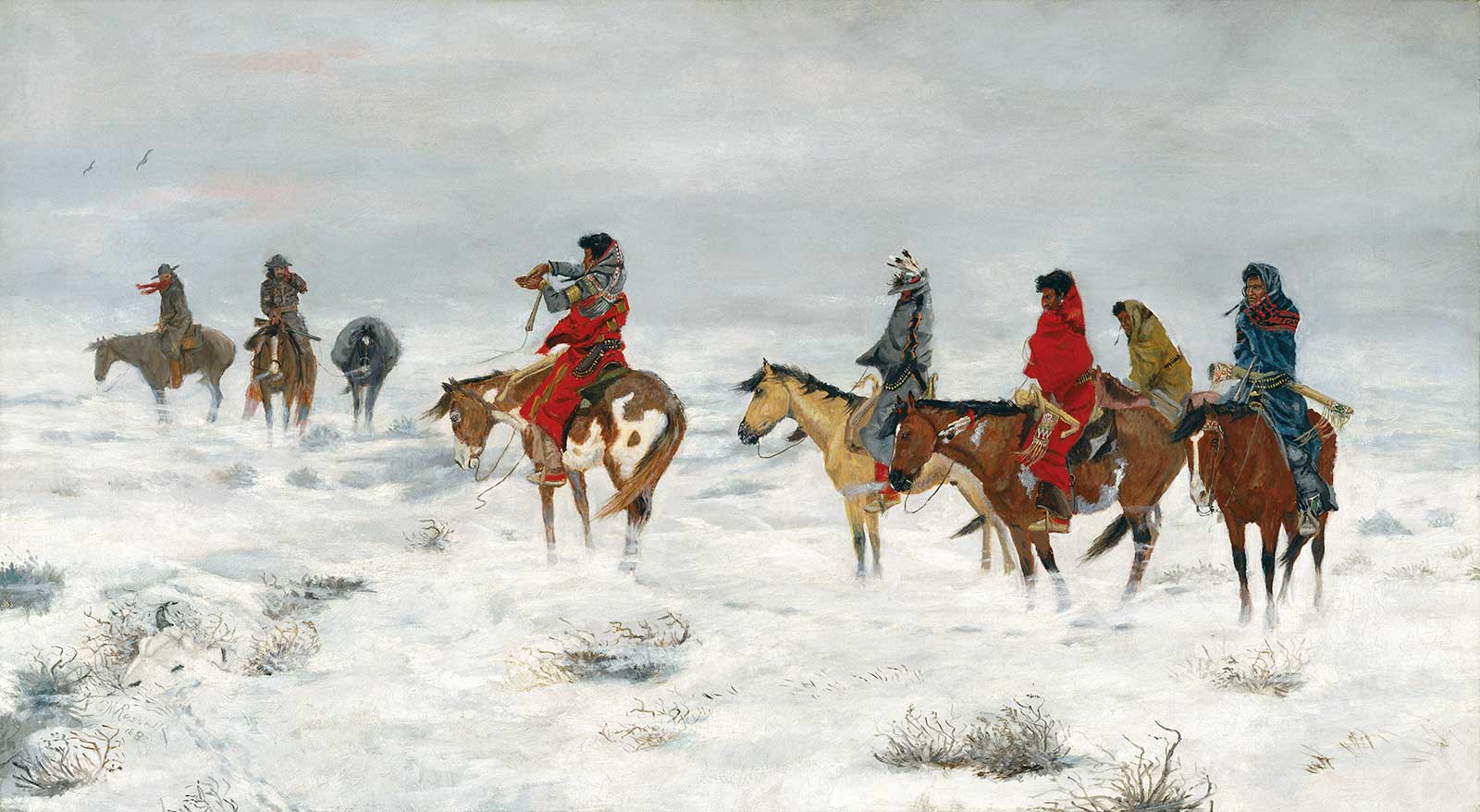 Charles M. Russell (1864-1926), Lost in a Snowstorm—We Are Friends, 1888, oil on canvas. Amon Carter Museum of American Art, Fort Worth, Texas, 1961.144.Included here is an essay by Andrew J. Walker, the executive director of the Amon Carter Museum of American Art in Fort Worth. This essay originally appeared on the museum’s website. All of the artwork shown here was originally on display in Room 850 during the president’s stay in Fort Worth.
+++
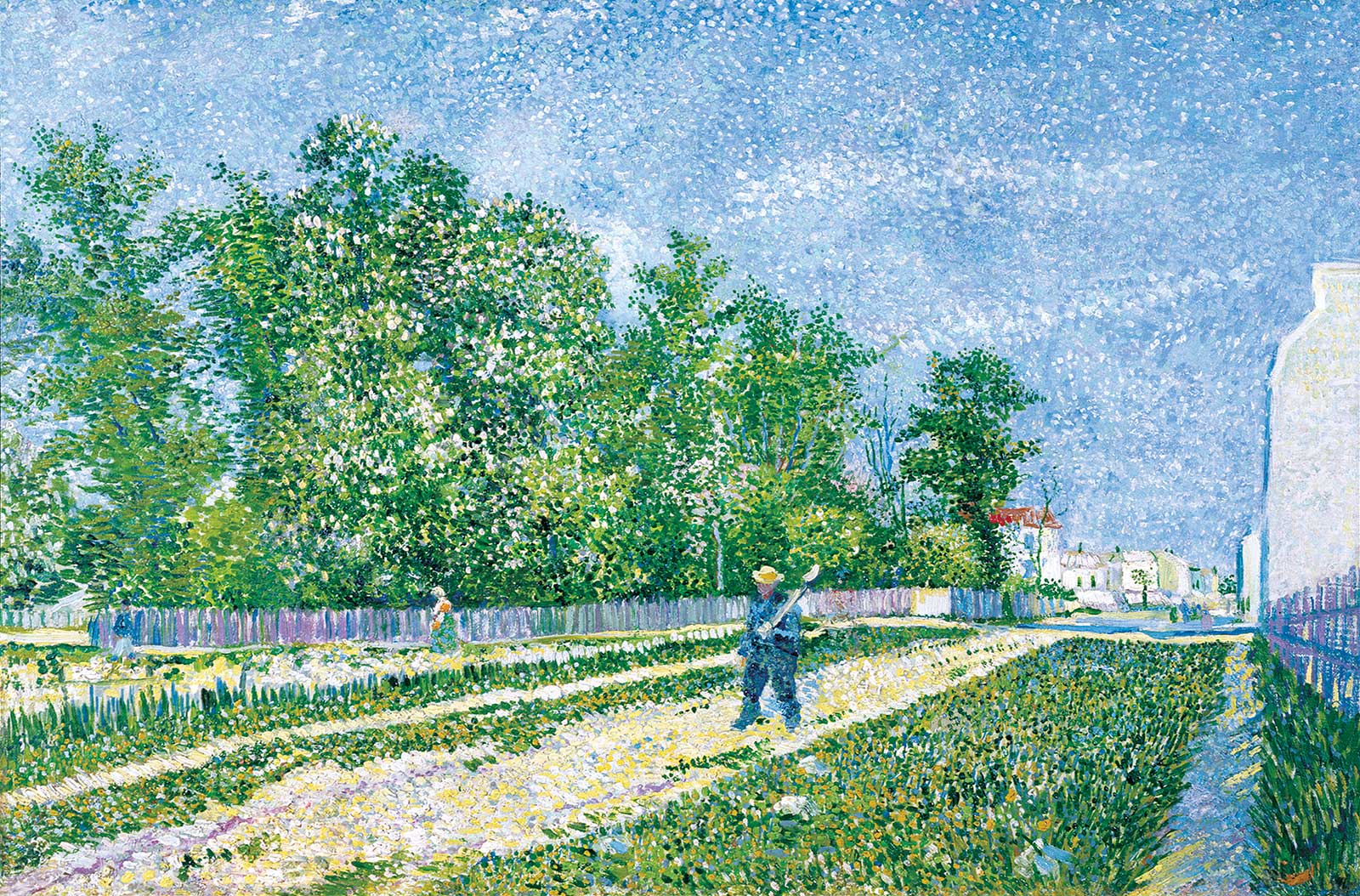 Vincent van Gogh (1853-1890), Road with Peasant Shouldering a Spade (Route aux confins de Pars, avec paysan portant le bêche sur l’épaule), 1887, oil on canvas. Private collection.ART AS TRUTH Charlie Russell in the Presidential Suite of the Hotel Texas
By Andrew J. Walker, Executive Director of the Amon Carter Museum of American Art
A remarkable effort on the part of the cultural leadership of Fort Worth occurred during the scheduled visit of President John F. Kennedy and First Lady Jacqueline Kennedy in November 1963. Understanding the importance of the city and its artistic ambitions, Ruth Carter Johnson (later Stevenson) worked with Owen Day and Sam Cantey III to create a stimulating exhibition of modern art in the suite to be occupied by the president and first lady on the eve of their fateful trip to Dallas, where one of our nation’s most devastating traumas would unfold—the assassination of John F. Kennedy.
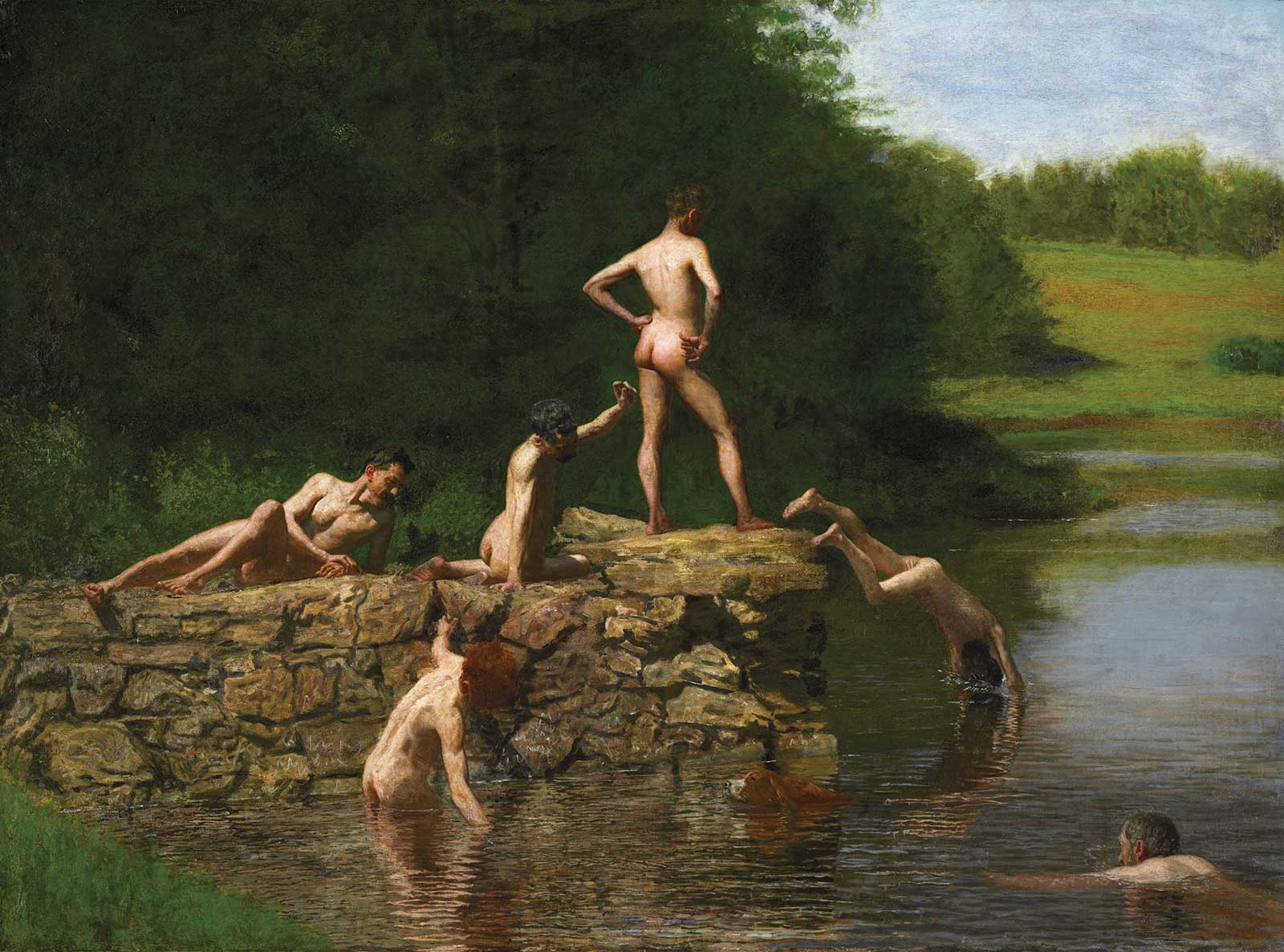 Thomas Eakins (1844-1916), Swimming, 1885, oil on canvas. Amon Carter Museum of American Art, Fort Worth, Texas, 1990.19.1.
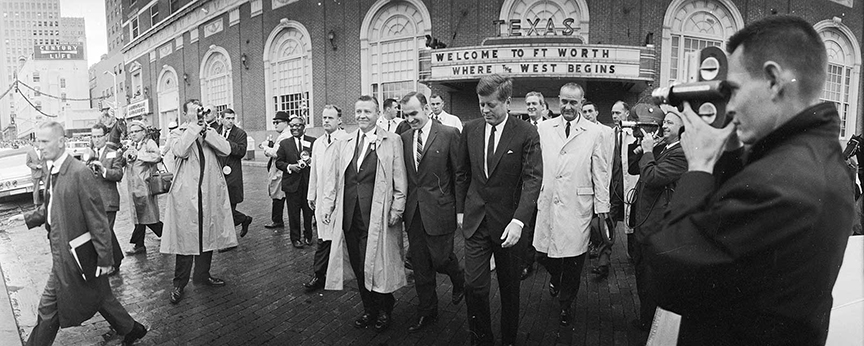 President John F. Kennedy leaves the Hotel Texas on the morning of November 22, 1963. AP Photo/Houston Chronicle.
In 2013, the Dallas Museum of Art and the Amon Carter Museum of American Art collaborated to recreate the curated hotel display in the exhibition Hotel Texas: An Art Exhibition for the President and Mrs. John F. Kennedy. The leaders in Fort Worth gathered 16 works of art and included paintings by Thomas Eakins, Lyonel Feininger, Marsden Hartley and Franz Kline, as well as sculptures by Henry Moore and Pablo Picasso, among others. The artworks were distributed through the three-room suite that included a parlor, the master bedroom and a second bedroom.
The couple arrived later than expected and did not notice the rooms full of original art until the next morning. In the commotion of their arrival, President Kennedy stayed in the master bedroom intended for the first lady, where the Fort Worth leaders had installed works by Vincent van Gogh, Maurice Prendergast and Raoul Dufy. The first lady’s bedroom, on the other hand, had distinctly more masculine work, including Eakins’s Swimming and, most importantly, Charles Russell’s Lost in a Snowstorm—We Are Friends, the only work depicting the American West in a city that was brimming with masterworks by Russell and his fellow painter of the frontier, Frederic Remington.
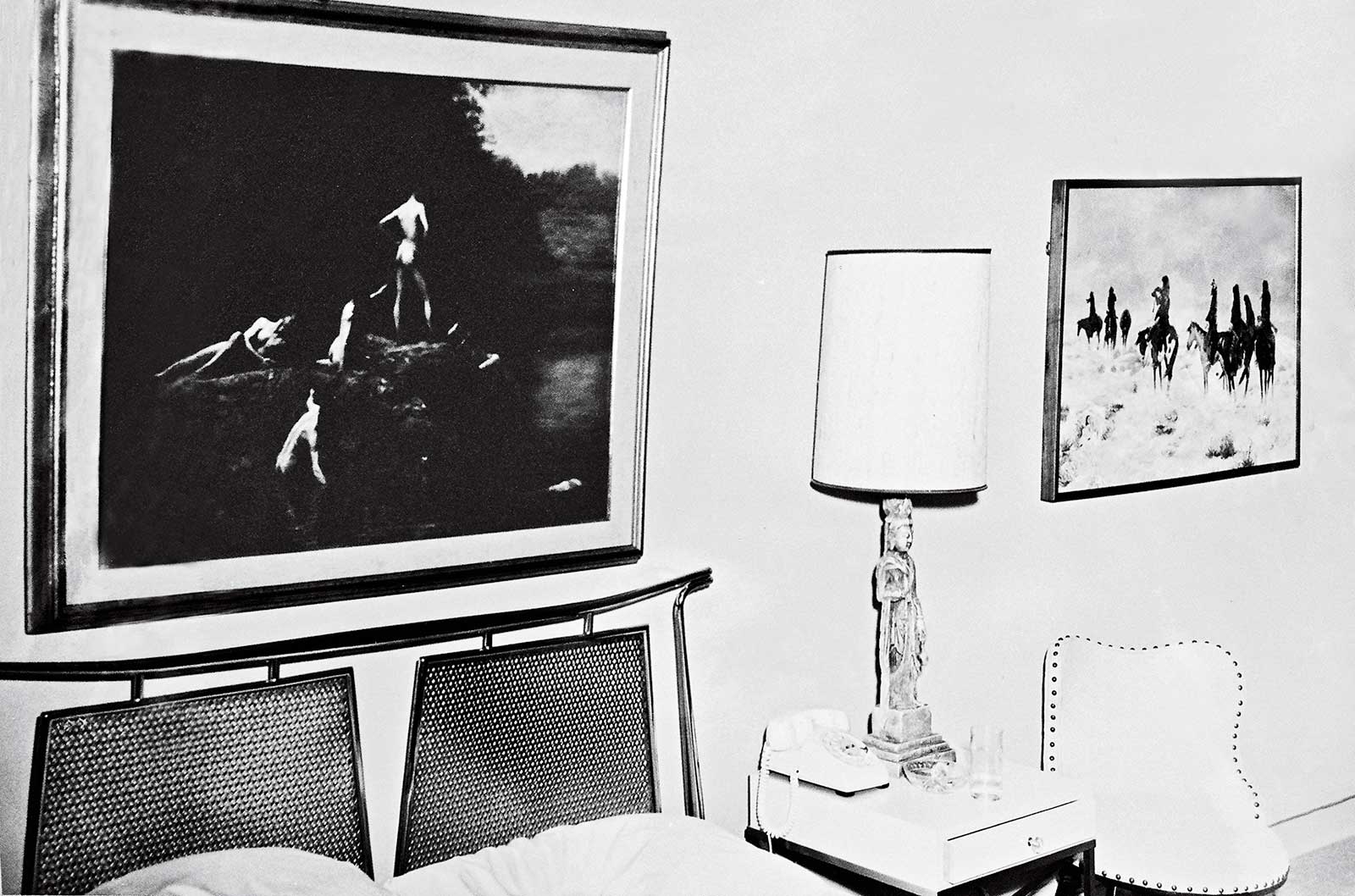 Thomas Eakins’ painting Swimming (1885) and Charles M. Russell’s Lost in a Snowstorm—We Are Friends (1888) installed side by side in the presidential suite of the Hotel Texas, prepared for the president and first lady, November 21, 1963.
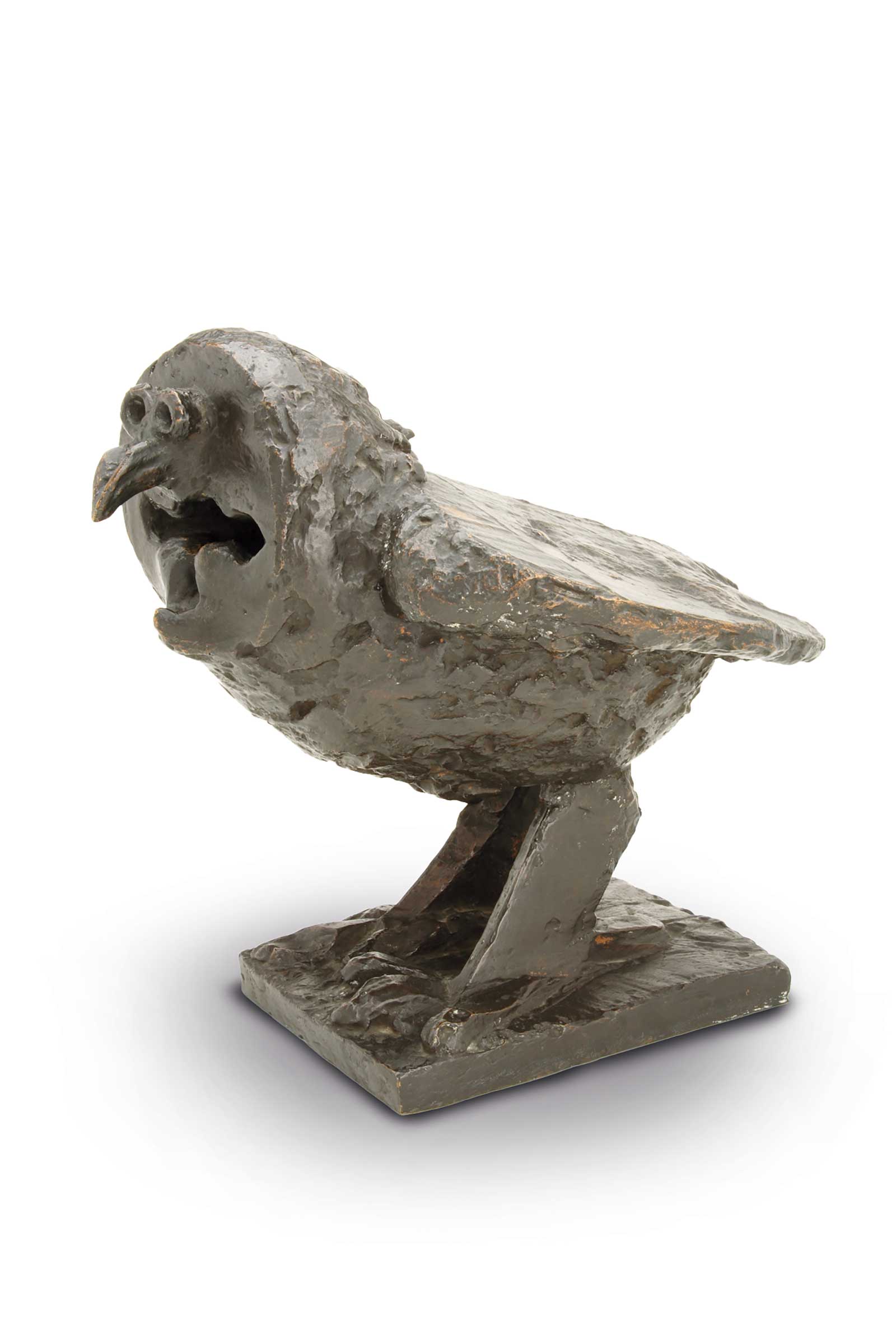
Pablo Picasso (1881-1973), Angry Owl, 1951-53, bronze. Collection of Gwendolyn Weiner.
The exclusion of such iconic images of the American West in the Presidential Suite at the Hotel Texas has always seemed strange. After all, Amon G. Carter had amassed works by both Russell and Remington that not only defined the myth of the West for generations to come but formed the core collection of the newly established museum that bore his name: the Amon Carter Museum of Western Art (today the Amon Carter Museum of American Art). What is less known is that works by Russell and Remington had been selected to adorn the Will Rogers Suite of the Texas Hotel, where Vice President and Texan Lyndon B. Johnson and Lady Bird Johnson would reside. [Ruth Carter] Johnson was, after all, a personal friend of the vice president and his wife, and did not want them to feel overlooked given the efforts made for the president.
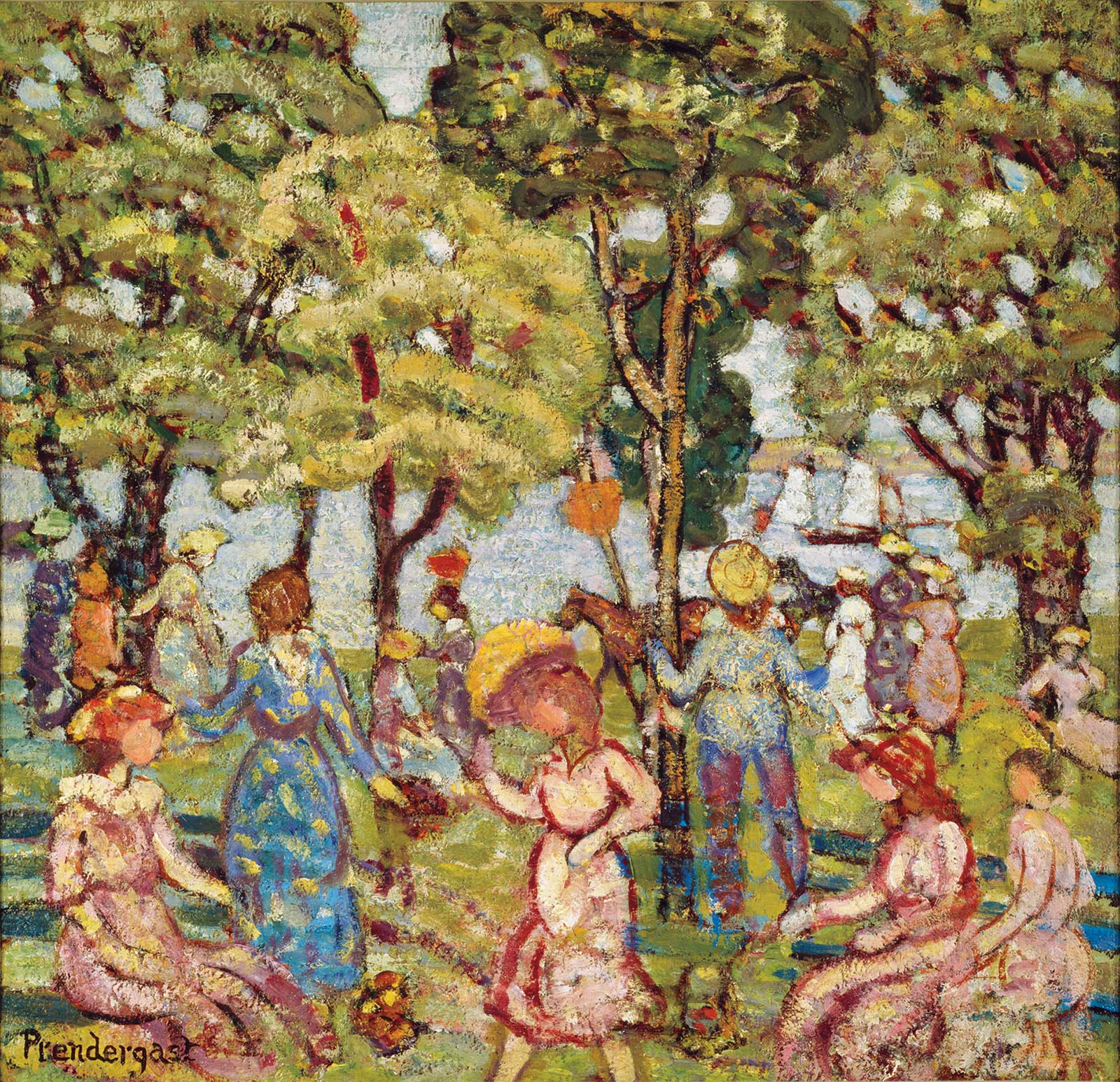
Maurice Prendergast (1858-1924), Summer Day in the Park, 1918-23, oil on canvas. Private collection, Fort Worth, TX.
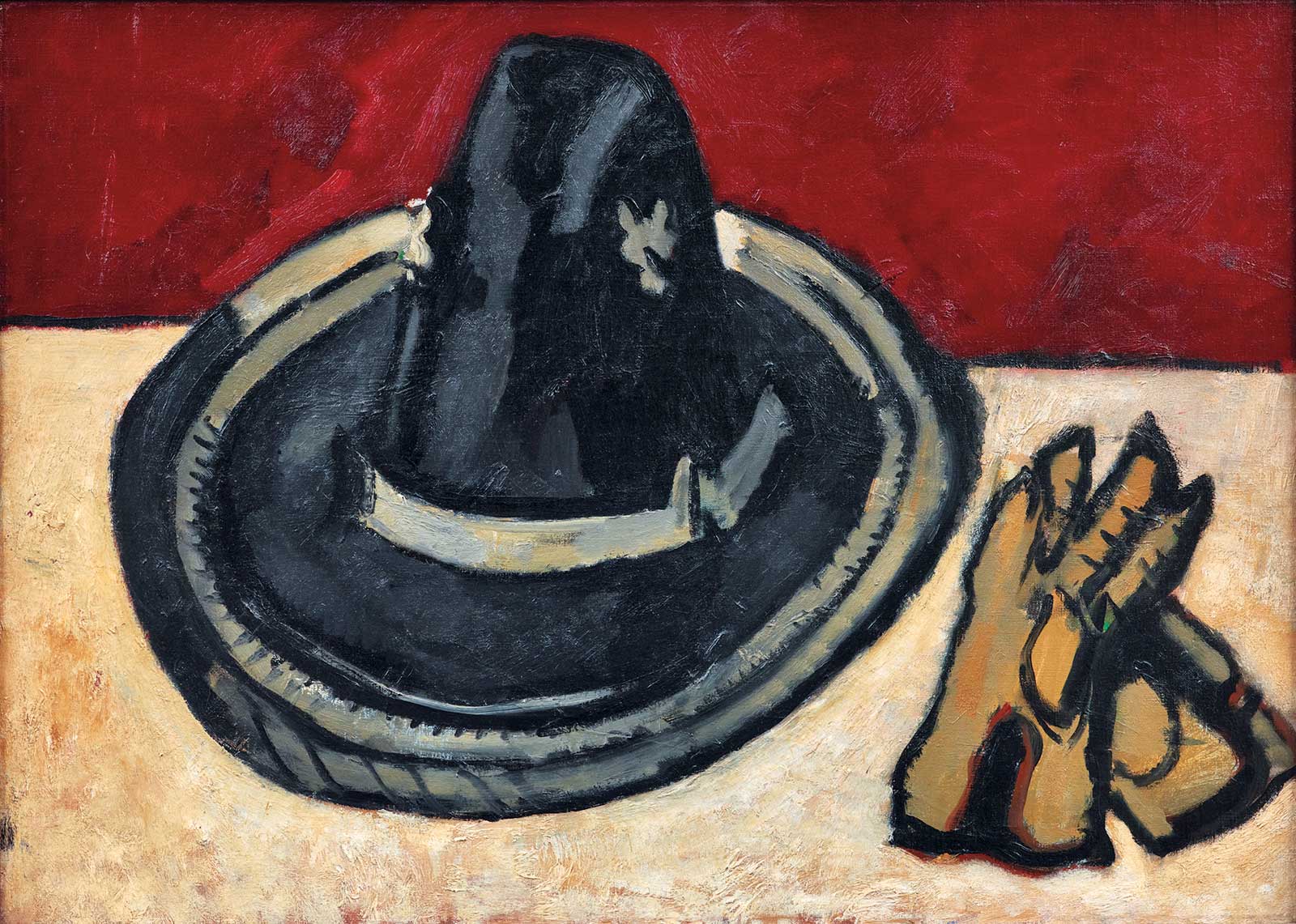
Marsden Hartley (1877-1943), Sombrero with Gloves, 1936, oil on canvas. Collection of Katherine Elizabeth Albritton.
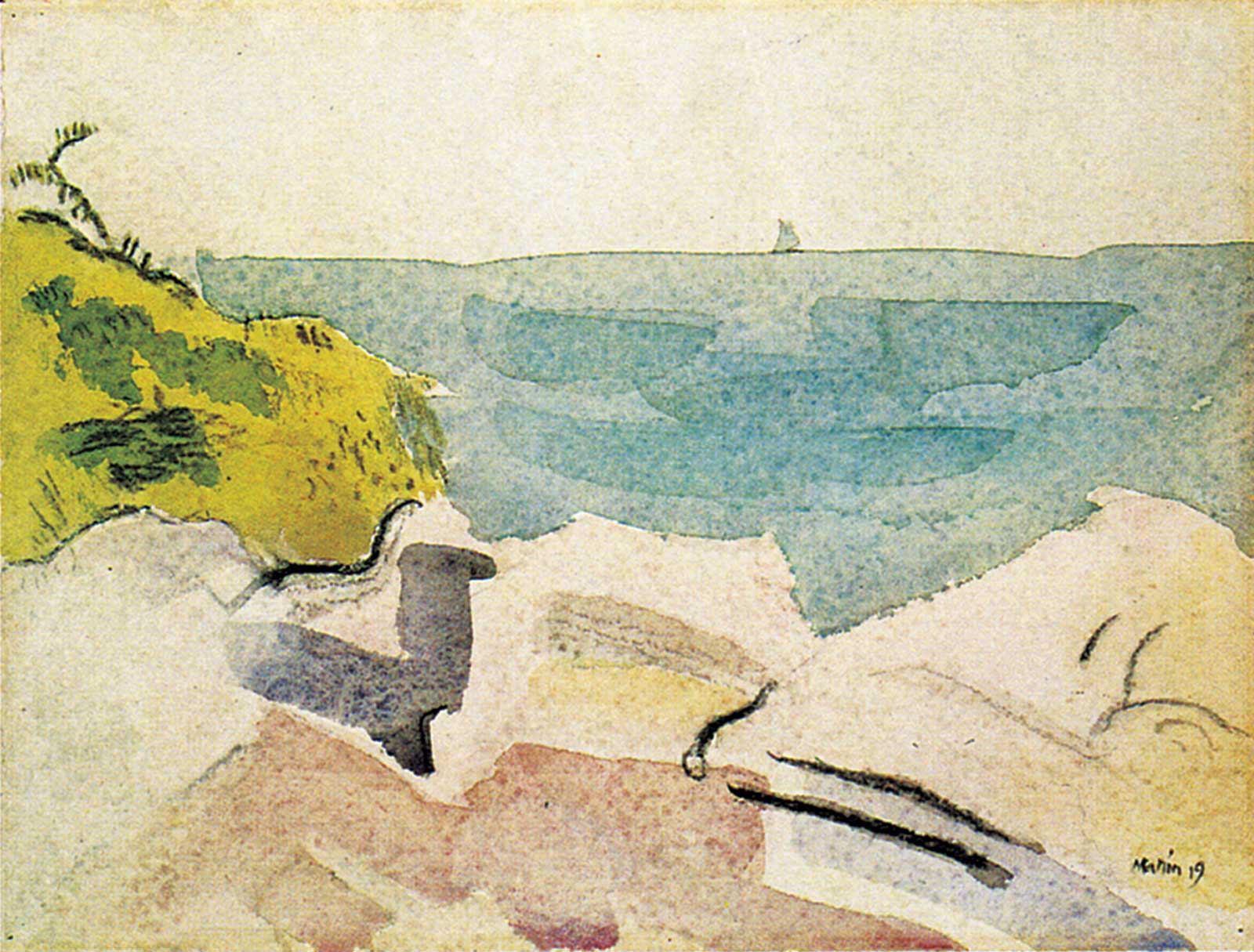 John Marin (1872-1953), Sea and Rock, Stonington, Maine, 1919, watercolor on paper. Location unknown.
The inclusion of Russell’s Lost in a Snowstorm was important for reasons that aligned with the city’s cultural leaders’ ambitions. If the goal, in part, was to demonstrate the aesthetic sophistication and breadth of Fort Worth as a center of artistic innovation, the Russell painting rooted that erudition firmly in the ethos of the American West. But there was something even deeper that only this Russell painting could underscore. The subject focuses on the friendly gestures in sign language of a small group of Indigenous riders aiding a pair of Anglo cowboys lost in a winter whiteout. Adversaries find aid in times of desperation and survival. Johnson championed this exhibition for the president and, as the leader of the Carter at the time, was keenly aware that art transcends politics. She did not vote for Kennedy in the 1961 election, but she was passionately devoted to arts independence and accessibility to all. Lost in a Snowstormcaptures that message that President Kennedy himself articulated when he wrote: “We must never forget that art is not a form of propaganda; it is a form of truth.” —
Powered by Froala Editor


